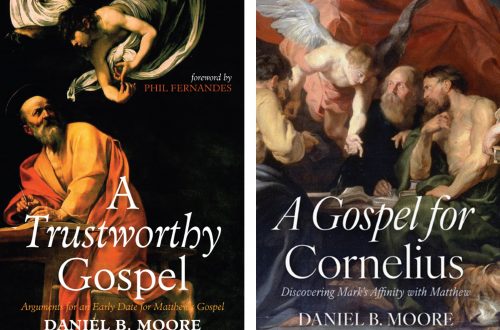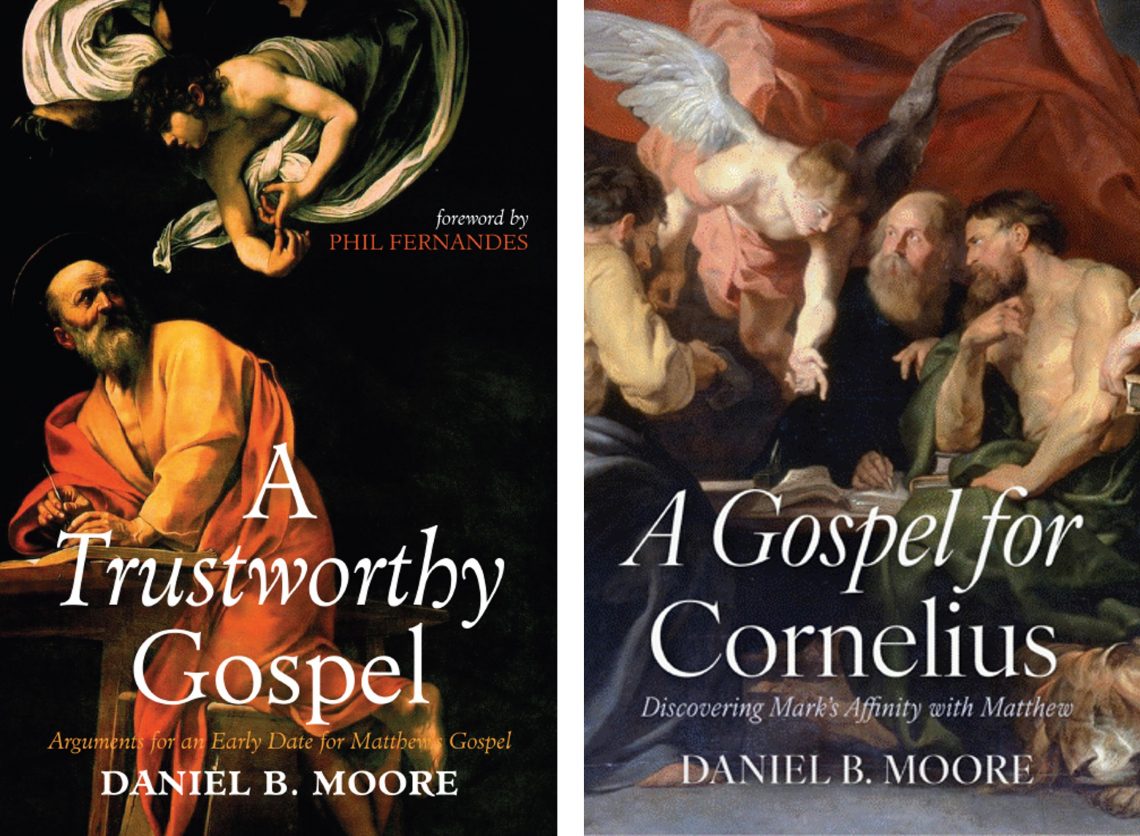
In “A Trustworthy Gospel,” I confront Gospel integrity challenges that arise when it is accepted that the earliest Gospels were not published until several decades after the resurrection. Yes, divine inspiration can ensure accuracy, but the New Testament authors also asked readers to trust their eyewitness testimony. In accepting these delays, Christian apologists have unfortunately latched onto what I call a novel doctrine of “perfect apostolic memory” in order to defend the integrity of the Gospels as accurate eyewitness testimony. I suggest that this neither reduces the skepticism of antagonists, nor engenders more confidence in Gospel reliability amongst Christians. Instead, I argue that belief in an early Matthew, published within a decade of the resurrection, is reasonable, defensible, and preferable over alternative speculations.
In “A Gospel for Cornelius,” I counter Gospel integrity challenges that arise due to content and sequential discrepancies between the Gospels of Matthew and Mark. Some Gospel critics claim that these differences demonstrate that the doctrine of inerrancy needs to be abandoned or reimagined to allow for errors or creative adaptations by the authors. Rather, I contend that many of these differences can be explained on the premise that an early Mark (AD 40–45) was published shortly after a chronologically accurate Matthew, if one is sensitive to Mark’s literary tendencies.